A forest trail, a near disaster, and a city that welcomed me with kindness.
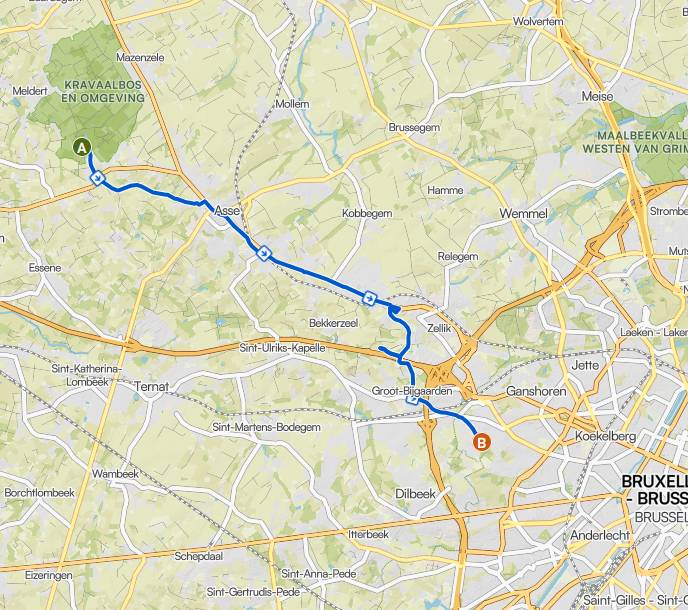
Day 5 began in the quiet of Gravaalbos.
The night before, I had pitched my tent at the Stinnekesaan bivak zone near Meldert, after an evening of food and conversation at Café Stinne. I had gone there expecting only dinner and a place to sleep. Instead, I found local people, curiosity, warmth, and another reminder that this journey is made as much of conversations as it is of kilometres.
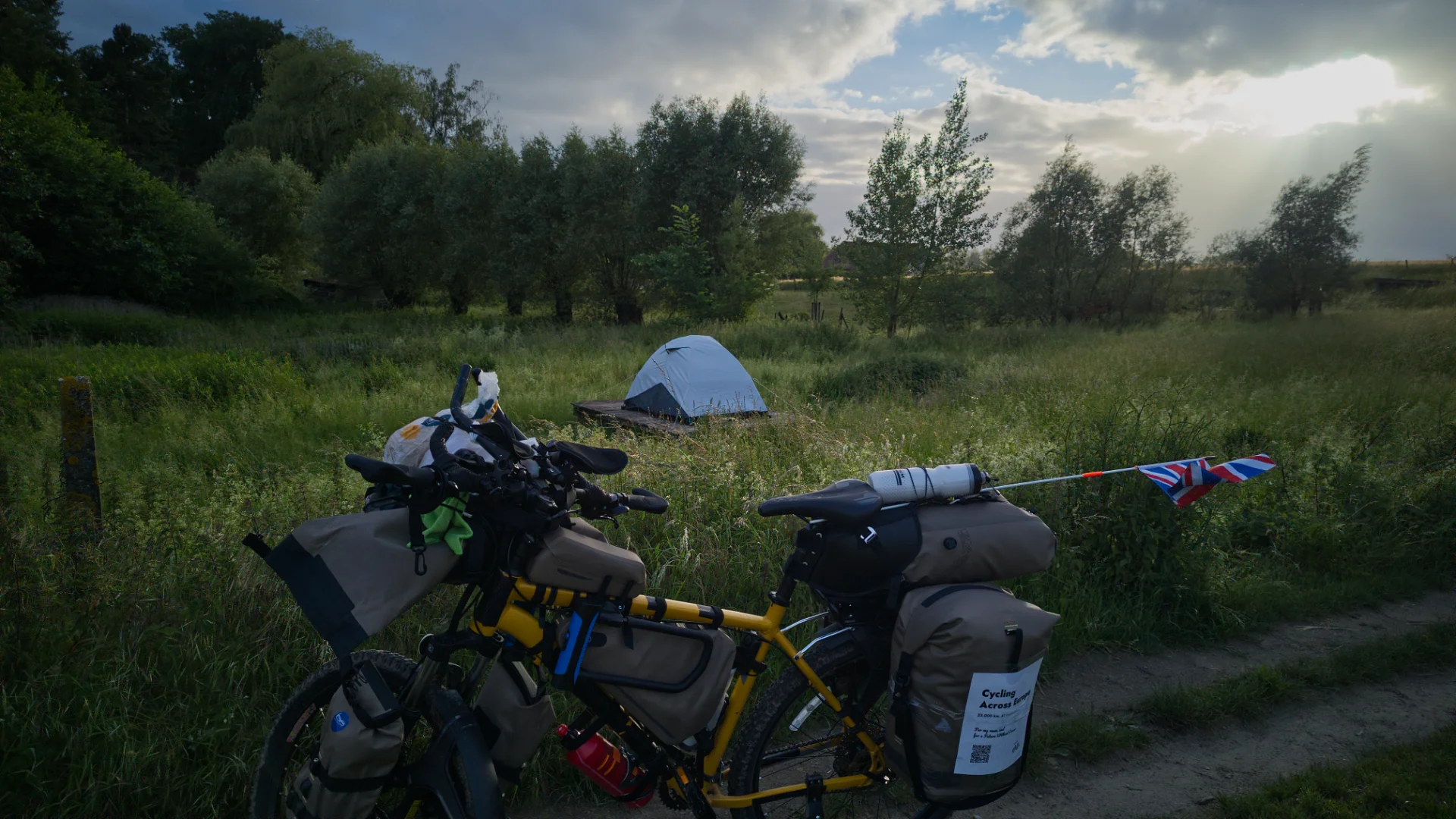
Now it was time to continue towards Brussels.
The day’s ride was relatively short compared with the longer distances ahead, but I am learning that distance alone never tells the whole story. A short route can still have steep climbs, mechanical problems, unexpected kindness, and moments that stay with you long after the ride is finished.
This day had all of those.
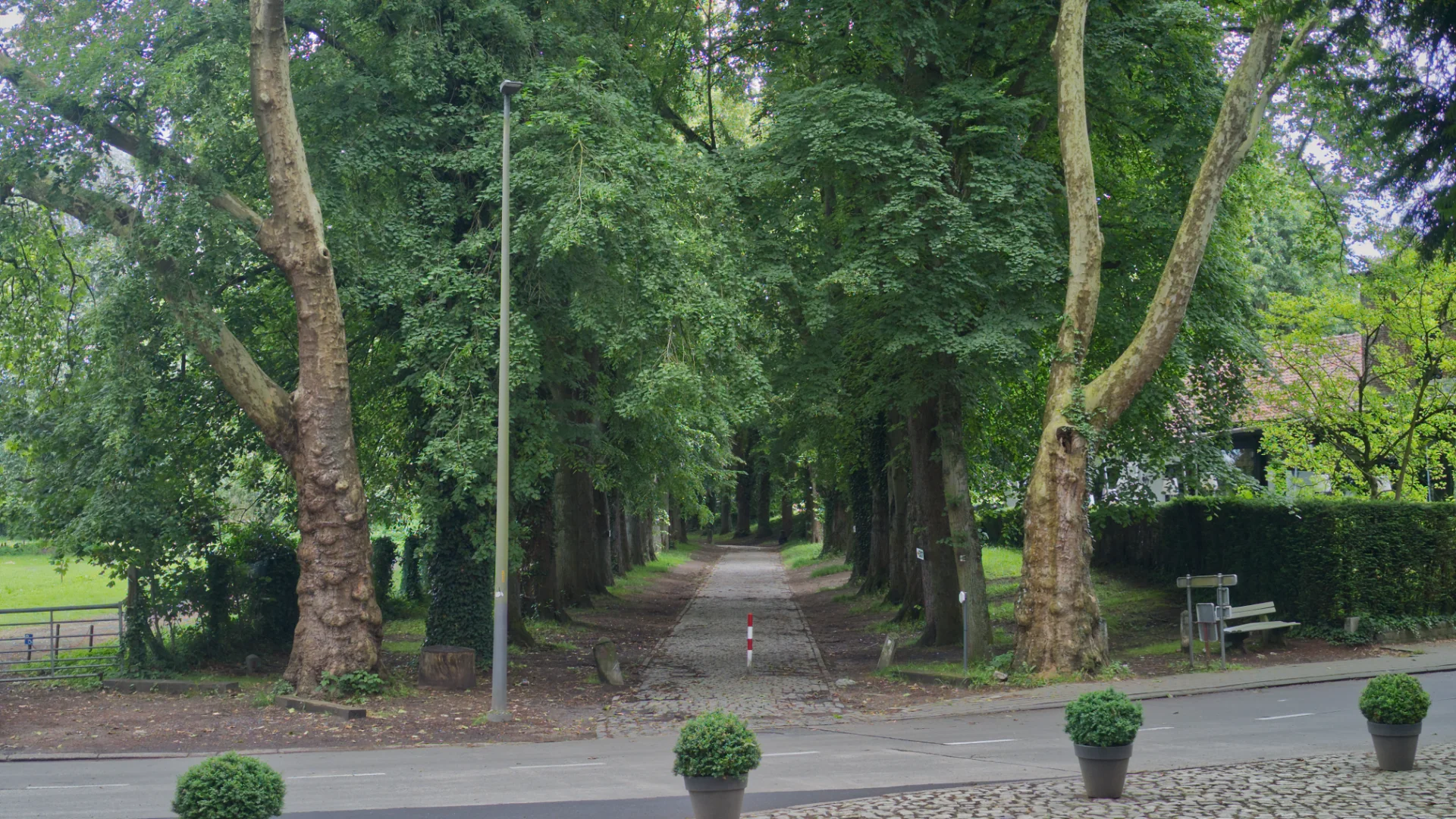
I left the bivak zone and began cycling through the forest trails of Gravaalbos. The route quickly became more demanding than I expected. It took me off-road, onto steep single track, through a trail that would have been exciting on a light mountain bike, but felt very different on a fully loaded expedition bicycle carrying my life across Europe.
Every climb demanded patience.
Every loose section asked for balance.
And every narrow part of the trail reminded me how heavy the bicycle was.
Then, while pushing and riding my way up the trail, I saw two gravel racers flying through the forest.
They were covered in mud, moving fast, focused, and powerful. They looked as if they were training, completely at home on the wet, uneven ground. I stood there for a moment, amazed by the speed and confidence with which they moved through the trail.
They were impressively fast.
For a moment, I forgot the weight of my own bike and simply watched them. I was moving slowly, loaded with panniers and purpose. They were moving like the trail itself had invited them to race.
Two very different kinds of cycling, sharing the same forest.
Then came the close call.
Somewhere on the Gravaalbos trail, my rear wheel caught a long, low-hanging twig. I did not realise at first how serious it was. The twig wrapped itself around the chain, cassette, and derailleur, twisting into the moving parts in a way that could easily have torn the derailleur off the frame.
It was one of those small moments that could have become a disaster.
I only discovered it because I stopped for water.
Had I kept pushing up the trail, or forced the pedals for just a little longer, I might have lost the derailleur completely. That would have changed the whole day. Perhaps the whole week. A broken derailleur on a loaded bicycle, in the middle of a forest trail, would not have been a small problem.
I stopped.
I looked.
I untangled everything carefully.
And I felt that strange mixture of frustration and gratitude that comes when something almost goes very wrong, but does not.
The journey had given me a warning.
Slow down.
Check the bike.
Do not take the road for granted.
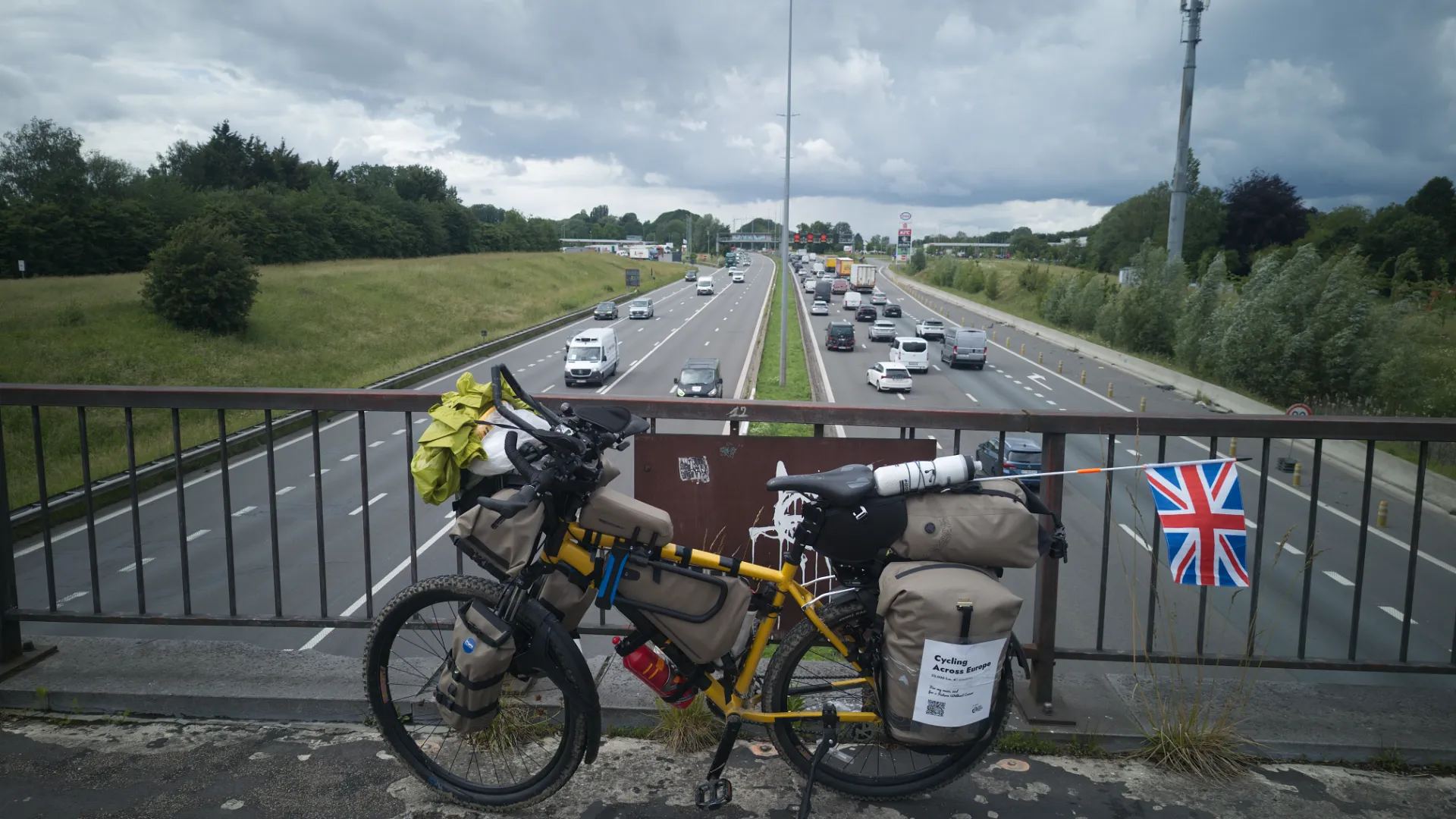
A bicycle expedition depends on small pieces of metal, chain links, bolts, spokes, cables, tyres, and decisions. One twig in the wrong place can bring everything to a halt. It was a humbling reminder that this journey is not only about endurance. It is also about attention.
After making sure the bike was still rideable, I continued towards Brussels.
The forest gradually gave way to roads, houses, traffic, and the feeling of entering a larger urban landscape. Brussels was getting closer with every kilometre.
This was the first capital city of the expedition.
That mattered.
From the beginning, the capital cities have held a special place in the idea of Cycling Across Europe for a Future Without Cancer. They are where I hope to meet local cycling communities, speak about active living, cancer prevention, and create moments that bring people together around cycling, health, food, and hope.
But Brussels did not welcome me first as a campaign city.
It welcomed me as a tired cyclist.
After entering the city, I stopped for a moment to catch my breath and drink some water. I must have looked tired, perhaps a little overwhelmed by the transition from forest trail to city streets.
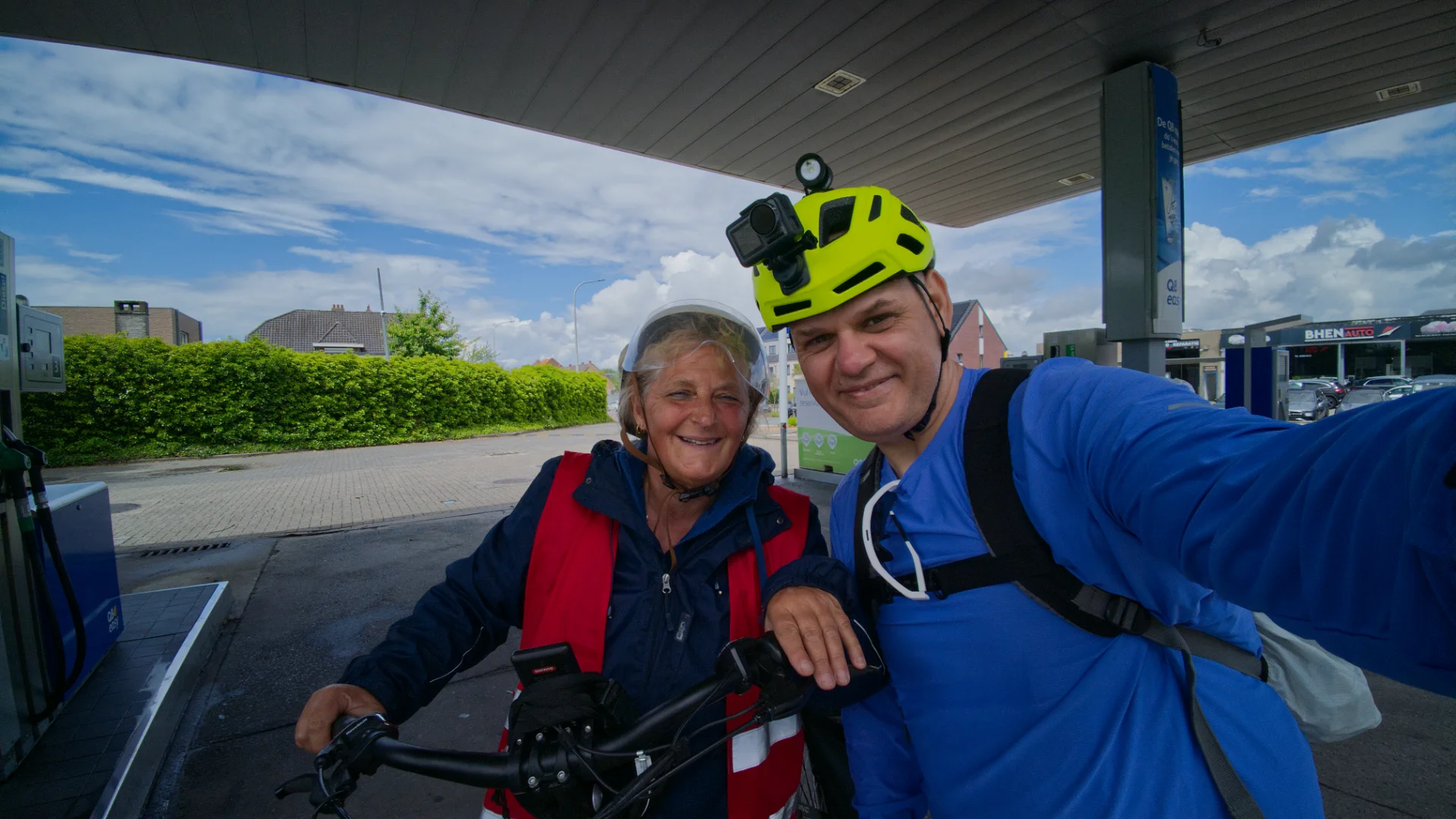
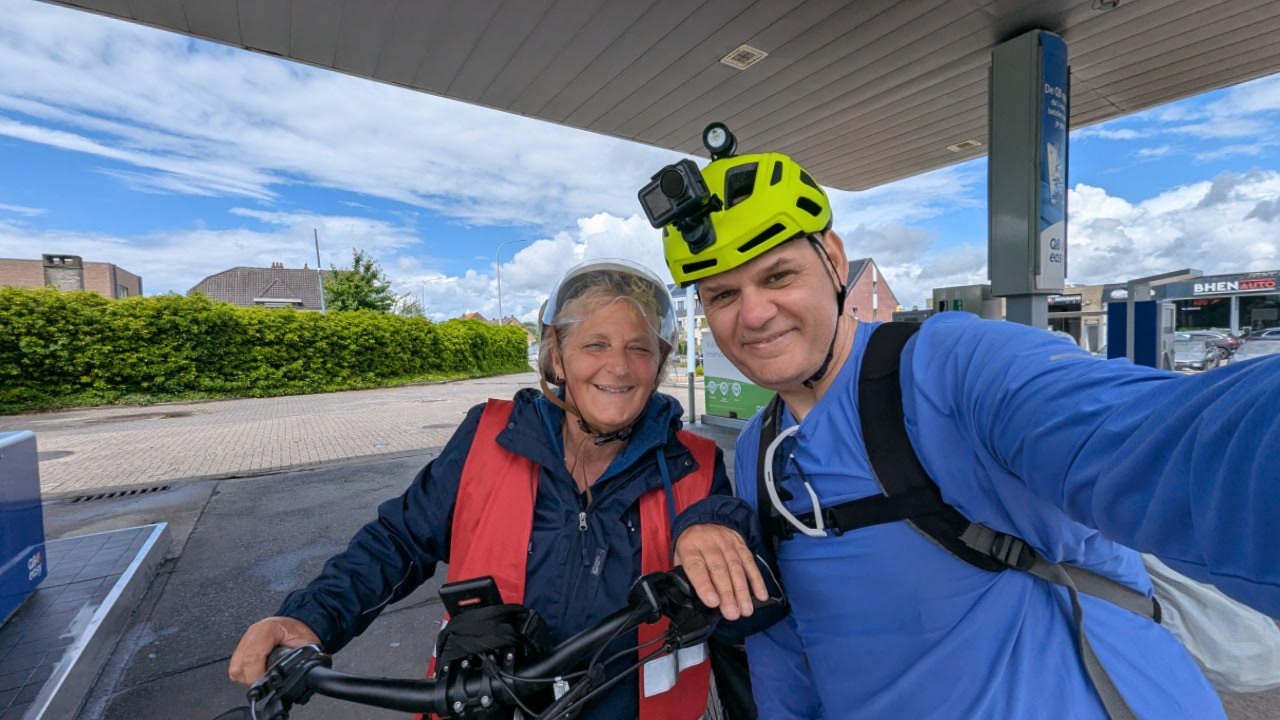
A kind lady approached me and asked if I was okay.
She asked if I needed help.
There was nothing dramatic about it, and that is exactly what made it beautiful. She saw someone stopped by the side of the road with a heavily loaded bicycle, and she cared enough to ask.
She lived nearby and invited me to rest for a while over a cold lemonade and refill my water bottles.
It was such a generous offer.
I could not stay long, because I still had to reach the place where I was spending the night, but the gesture stayed with me. We took a photo together, and then I continued on my way.
Brussels had already given me kindness before I had properly arrived.
That evening, I was heading to Alistair, Laurence, and their daughter’s Gaëlle place. They had agreed to let me pitch my tent in their garden, which was already more than enough. A safe garden, a place to sleep, and the kindness of strangers becoming hosts.
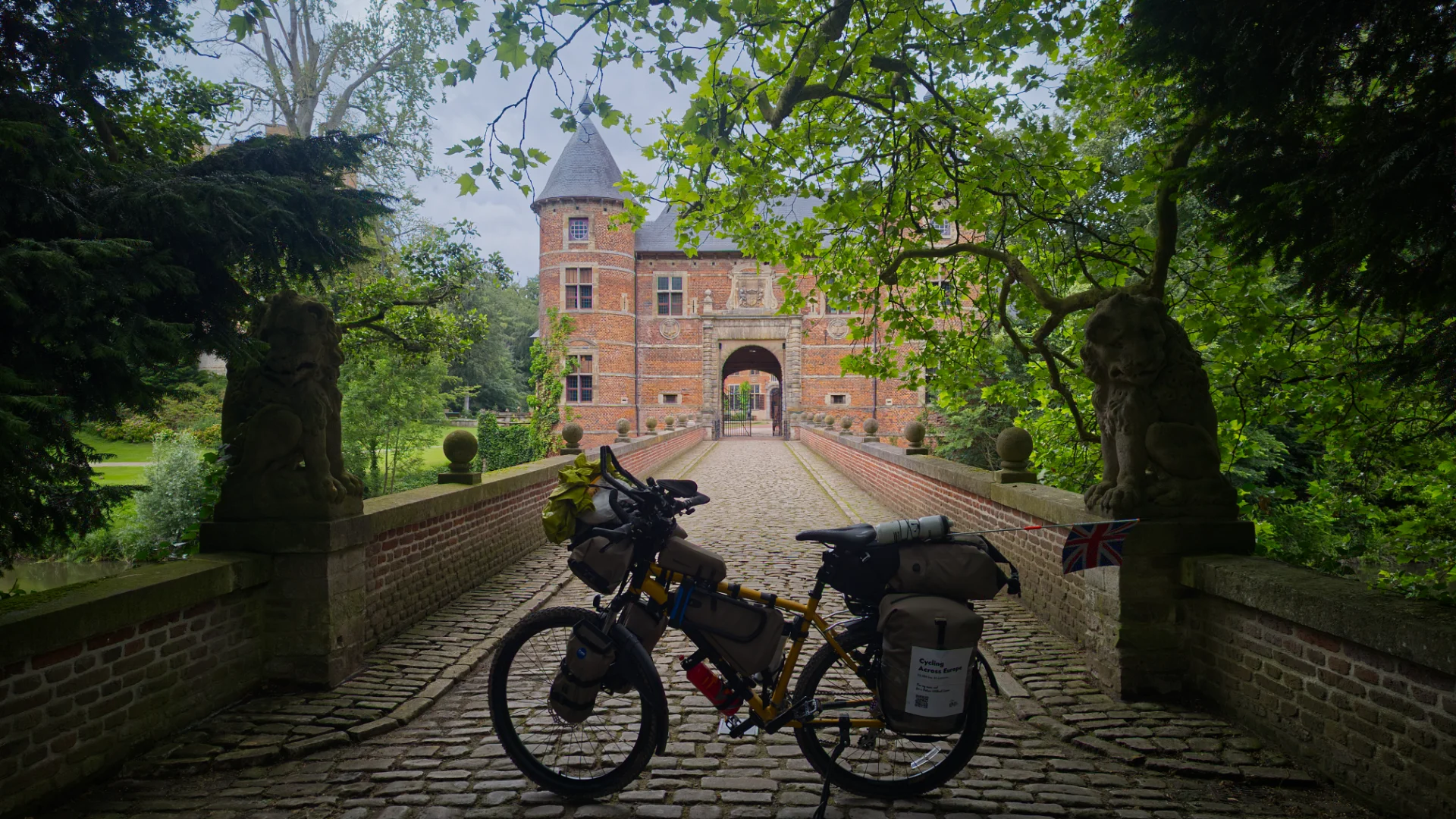
I arrived at around 5:30 pm and met their neighbour, Lore.
Soon after, Lore and I went to the local supermarket to buy food for the evening. That night, the street was taking part in a neighbours’ feast, connected with the local Neighbour’s Day. Residents would bring food outside, close the street, set up long tables, eat together, and spend the evening with the people who live around them.
It felt almost too perfect for the journey.
This expedition is built around the idea that food, movement, and community matter. I had cycled all day towards Brussels, through forest trails, a near mechanical disaster, and the kindness of a woman offering lemonade, only to arrive at a street where neighbours were about to gather around food.
At around 7:00 pm, we closed the street.
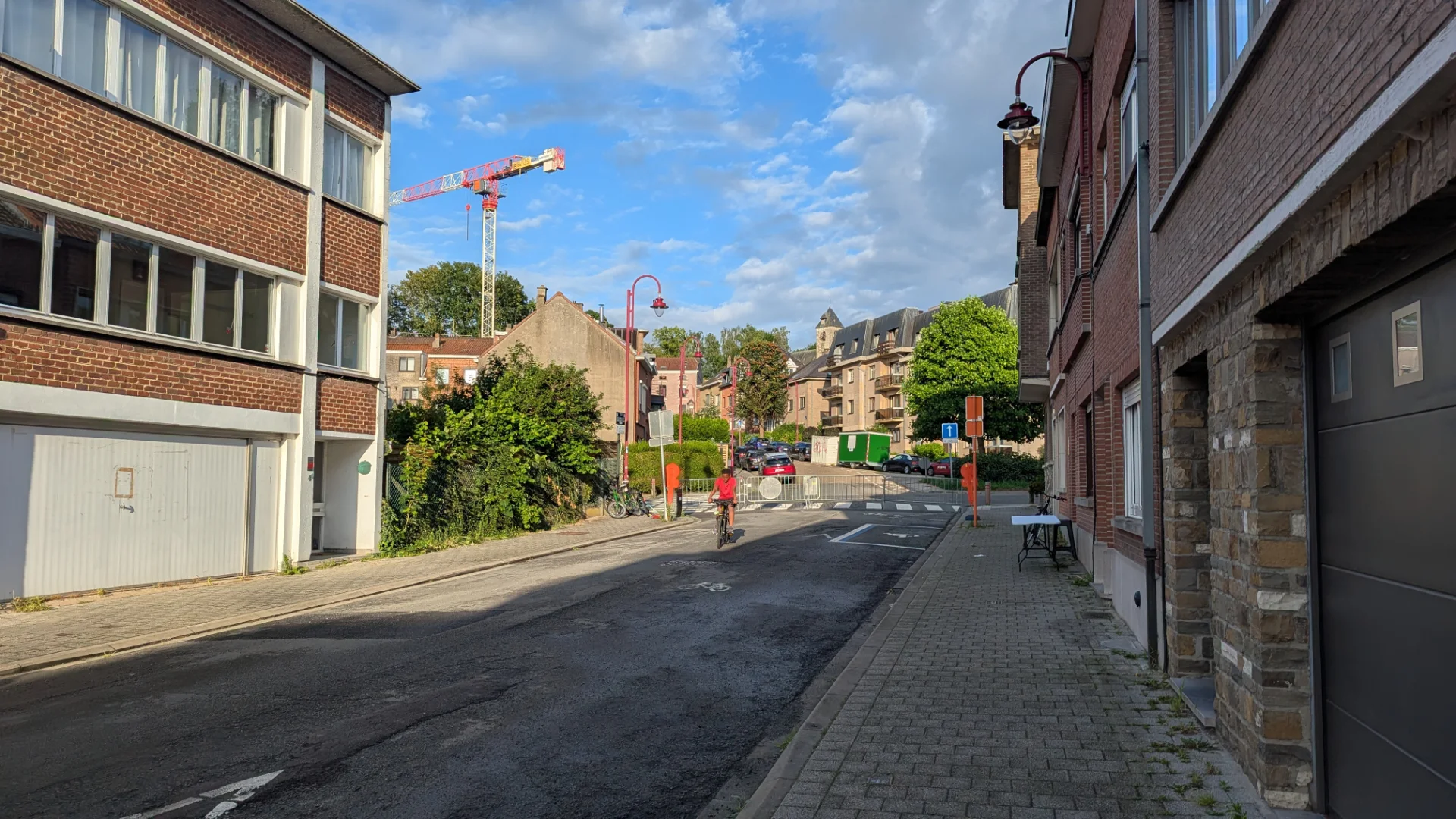
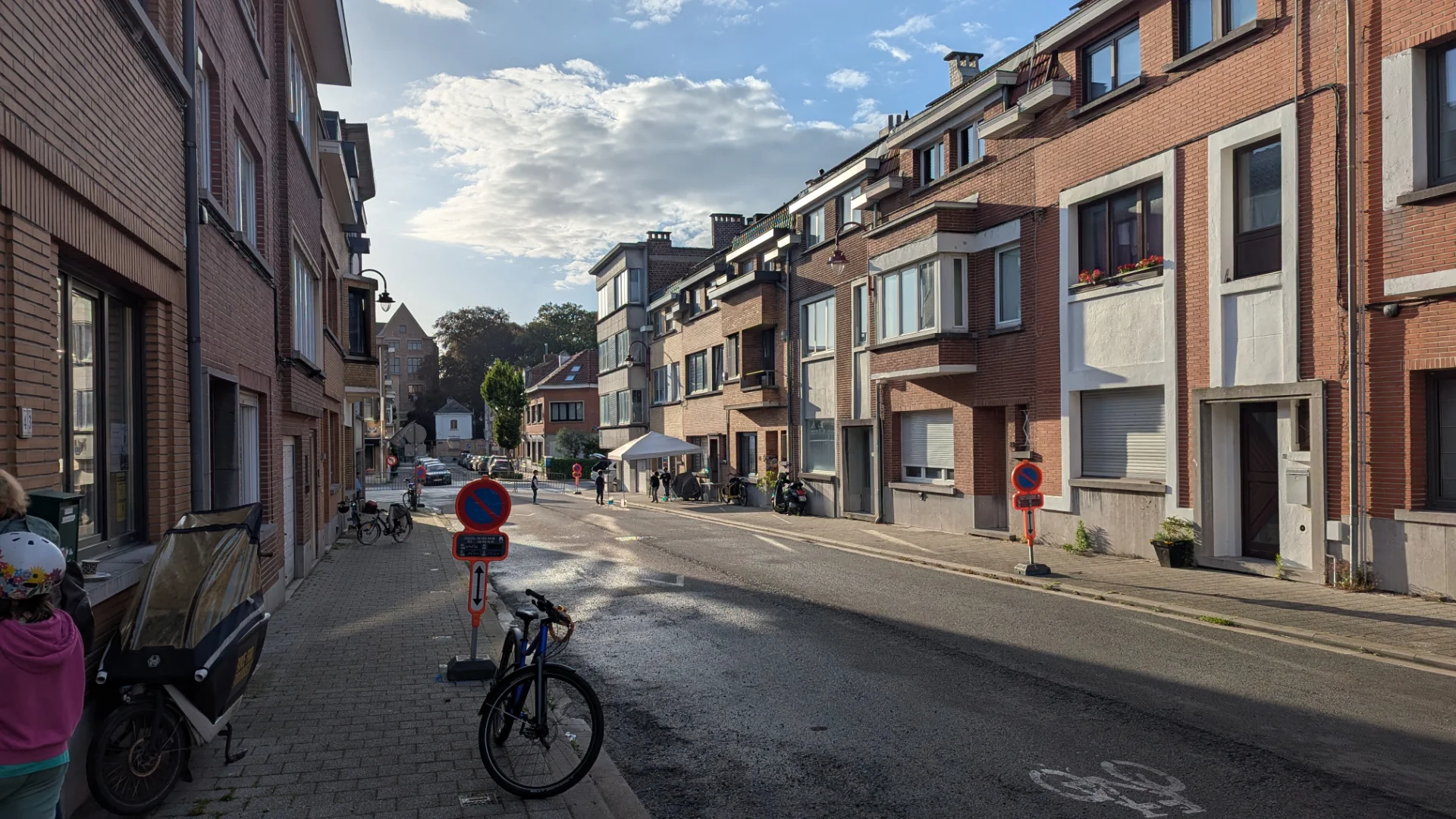
The tables came out.
The food came out.
People began to gather.
Children played. Music filled the evening. Neighbours talked, laughed, cooked, shared, and passed plates along the tables. It was not a performance. It was not a formal event. It was simply community being practised in the open air.
There was something deeply moving about that.
When you travel by bicycle, you arrive in places with no armour. You are tired, visible, dusty, hungry, and dependent on the kindness of others. You cannot pretend to be separate from the world. You need water. You need food. You need directions. You need safe places to sleep. You need people.
And here, in Brussels, on my first evening in the city, I found a street full of people doing what this journey is trying to celebrate.
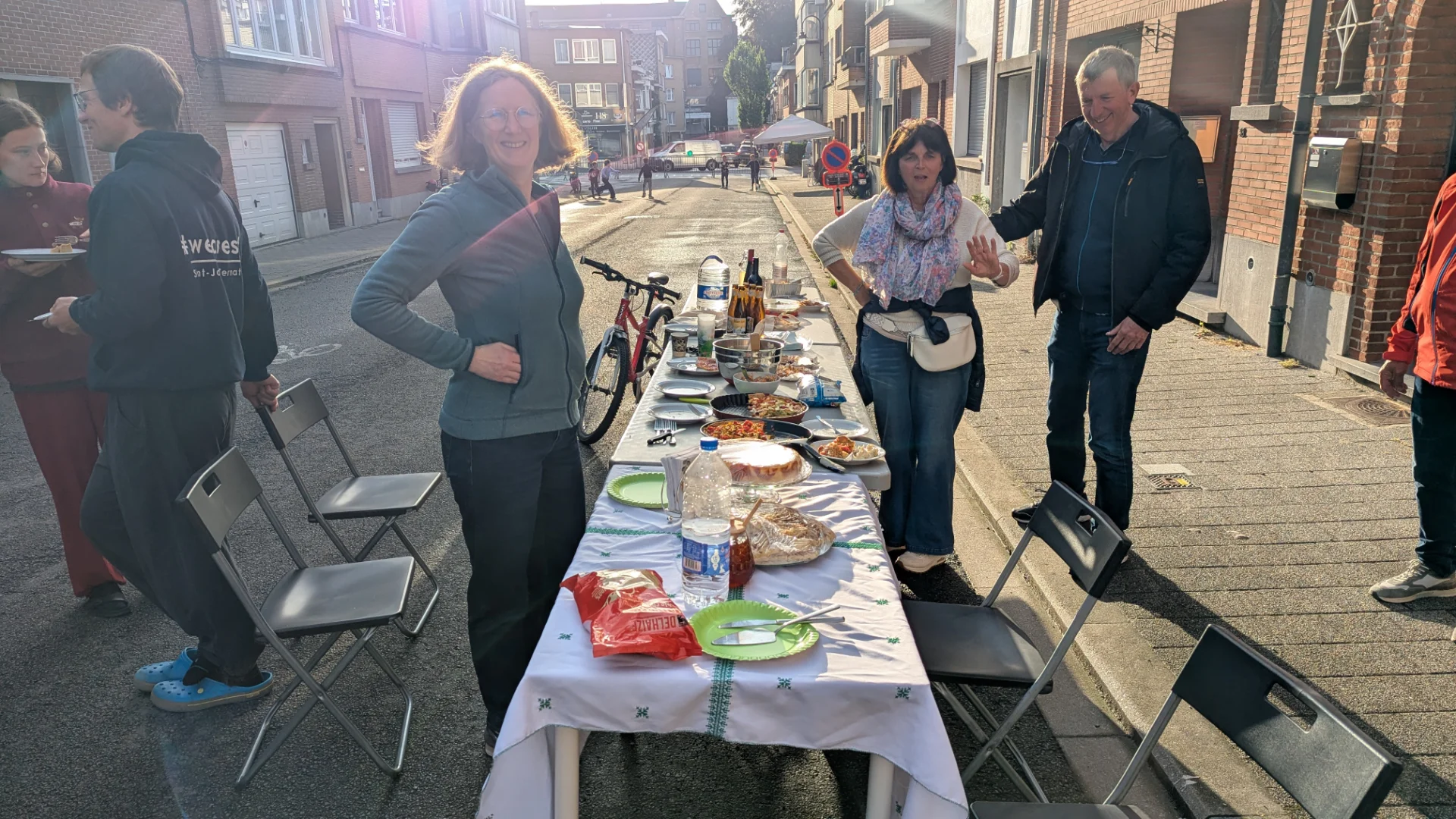
Coming together.
Sharing food.
Making space.
Talking.
Laughing.
Looking after one another.
During the evening, I spoke with people about the expedition, about cycling across Europe, about my mum, about cancer prevention, and about why this journey matters to me. These conversations are the heart of the project. Not speeches. Not lectures. Just human conversations around ordinary tables, in ordinary streets, where extraordinary kindness can happen.
Later in the evening, the weather changed.
The rain came.
My plan had been to sleep in the garden, but once again, kindness stepped in. Alistair, Laurence, and Gaëlle offered me a place inside, on their huge and very comfortable sofa in their living room.
After the wet evening and the long day, it felt like luxury.
A sofa.
A roof.
A dry place to sleep.
Another door opened.
Another act of generosity.
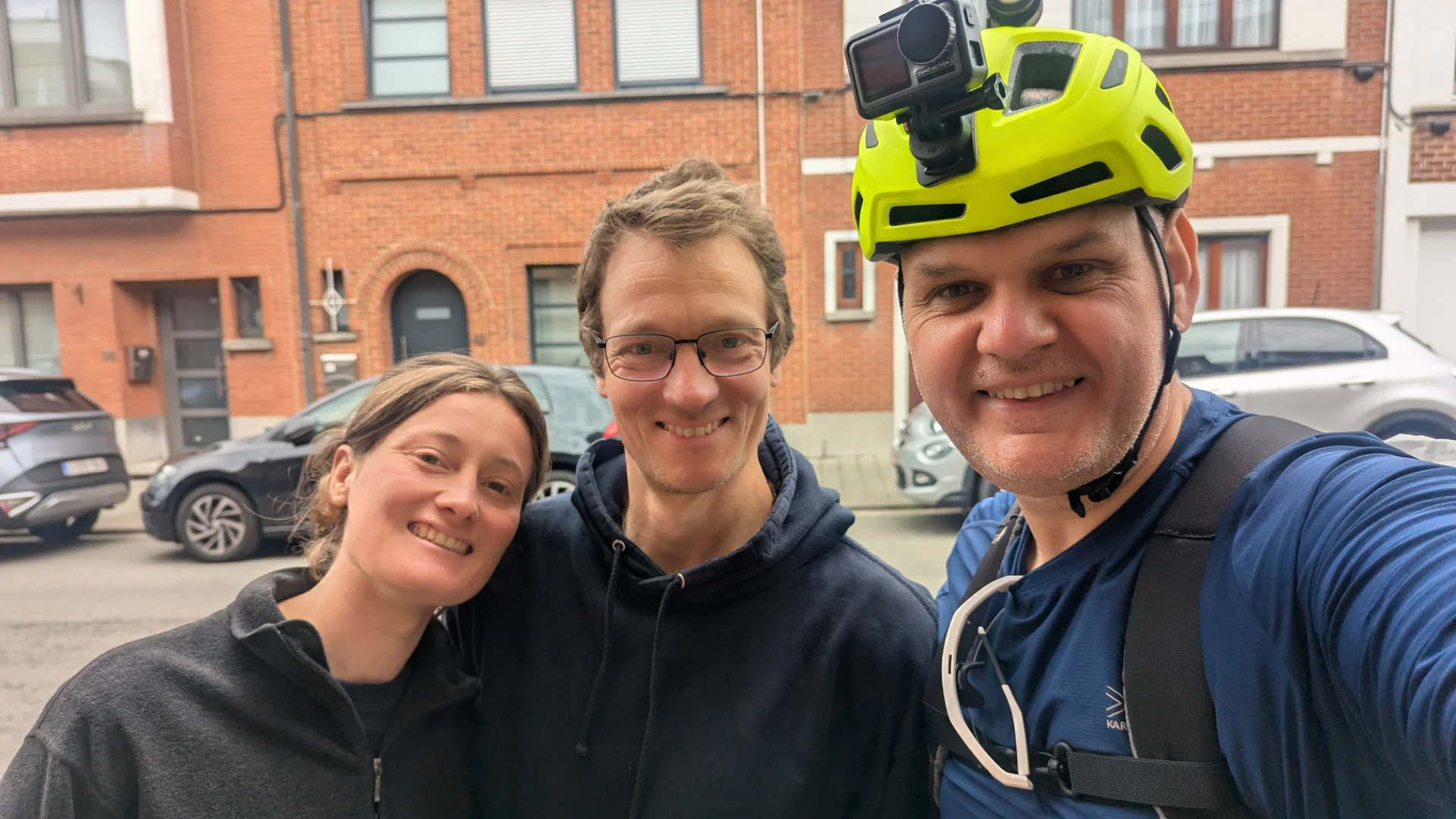
The next morning, Alistair and Laurence made me breakfast. I stayed a little longer to catch up with the website and online content before continuing towards the north-west part of Brussels, where I would spend the next couple of days.
The ride from Gravaalbos to Brussels may have been relatively short on the map, but it carried so much.
A forest trail.
Two mud-covered gravel racers flying up the tracks.
A twig almost tearing off my derailleur.
A lucky stop for water.
A city stranger offering help, cold lemonade, and fresh water.
Alistair, Laurence, Gaëlle, and Lore.
A neighbourhood feast.
Long tables in the street.
Children playing.
Music.
Rain.
A sofa.
Breakfast.
Brussels was the first capital city of the expedition, and it welcomed me not with monuments, politics, or grandeur, but with something much more important.
Kindness.
And perhaps that is the lesson I needed from the first capital.
A healthier future is not only built in hospitals, research centres, campaigns, or institutions.
It is also built in streets.
Around tables.
Between neighbours.
In the simple act of noticing someone, asking if they are okay, offering water, sharing food, and making room for one more person.
Day 5 carried me into Brussels.
But more than that, it carried me into community.

Leave a Reply